You may notice that your distillation column is not performing as efficiently as before. Product purity starts to decline, energy consumption increases, and process stability becomes harder to maintain. These problems are common in chemical plants and usually begin with small maintenance gaps. If ignored, they can lead to costly downtime and reduced plant performance.
This is why industrial distillation column maintenance is essential for reliable and efficient operation. A structured maintenance approach helps you improve separation efficiency, reduce energy costs, and extend equipment life. In this guide, you will learn practical maintenance practices that are easy to understand and useful for everyday plant operations.
A distillation column is a key unit in chemical processing. It separates liquid mixtures based on differences in volatility and boiling points. This process helps you achieve product purity, recover solvents, and improve process efficiency.
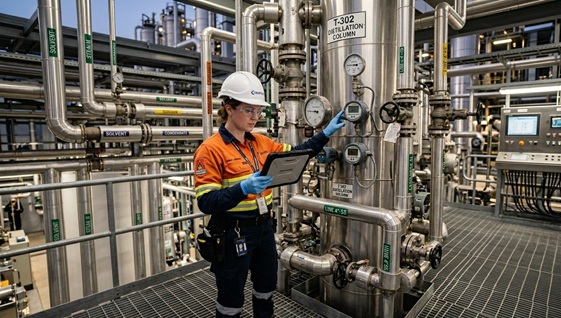
A typical industrial distillation column includes the column shell, trays or packing, reboiler, condenser, and instrumentation. Each component plays an important role in maintaining stable operation. If one part does not perform properly, the overall efficiency of the system can decrease.
Regular maintenance ensures that these components work together smoothly and safely.
Poor maintenance often leads to gradual performance decline. Fouling and scaling inside the column reduce heat transfer efficiency and increase energy consumption. Damaged trays or packing can disturb vapor-liquid contact, resulting in lower separation efficiency and inconsistent product quality.
You may also face issues such as flooding, weeping, corrosion, or increased pressure drop. These problems can affect both safety and operating cost. Most of them develop slowly, which is why regular inspection and monitoring are important.
Identifying early warning signs helps you prevent expensive repairs later.
Reactive maintenance means fixing equipment after a failure occurs. This approach often leads to unexpected shutdowns and higher maintenance costs.
Preventive maintenance focuses on planned inspections and servicing before problems become serious. It helps you maintain stable operation, improve energy efficiency, and extend equipment life. Plants that follow preventive maintenance strategies usually experience fewer disruptions and better long-term performance.
A proactive approach gives you more control over plant reliability.

Daily monitoring is the foundation of effective maintenance. You should track temperature profiles, pressure readings, and flow rates to identify unusual trends. Small variations in operating data can indicate early-stage problems. Consistent monitoring helps you take corrective action before efficiency drops.
Fouling is one of the main reasons distillation columns lose efficiency. Deposits reduce heat transfer and increase steam consumption. Cleaning schedules should be planned based on feed composition, operating conditions, and fouling tendency. Proper cleaning improves performance and helps maintain stable operation.
Trays and packing are critical for efficient separation. Damage, misalignment, or blockage can reduce vapor-liquid contact and affect product purity. During shutdown inspections, check internals carefully and replace worn components when necessary. Maintaining column internals helps sustain long-term performance.
The reboiler and condenser control heat transfer within the system. If these components are dirty or damaged, energy usage increases and efficiency decreases. Regular inspection for scaling, leaks, and heat transfer performance helps reduce utility costs and maintain process stability.
Sensors and control systems keep the distillation process stable. Calibration errors or faulty instruments can lead to incorrect operating conditions. Regular testing of instrumentation, alarms, and safety systems ensures reliable automation and consistent process control.
Energy cost is one of the largest operating expenses in distillation processes. A clean and well-maintained column transfers heat more effectively and reduces steam consumption. Proper maintenance allows the system to operate closer to design conditions, improving overall efficiency.
Even small improvements in maintenance practices can create noticeable energy savings over time.
Distillation systems operate under high pressure and temperature. Safety should always be a priority during maintenance work. Ensure proper shutdown procedures are followed before inspection or servicing begins. Equipment must be depressurized and cooled to safe levels.
Following safety protocols and using appropriate protective equipment helps prevent accidents and protects both personnel and equipment.
A structured maintenance plan helps you maintain consistency. Daily activities should focus on monitoring operating parameters and checking system stability. Weekly inspections can include leak checks and instrumentation review. Monthly evaluations should analyze performance trends and energy usage. Annual shutdown maintenance allows detailed inspection and replacement of worn components.
A planned schedule reduces unexpected failures and supports reliable operation.

Sometimes maintenance alone cannot solve recurring problems. Frequent breakdowns, increasing energy consumption, or poor separation performance may indicate that the system requires optimization or upgrading.
Working with an experienced industrial distillation system manufacturer in India can help you evaluate process performance and identify improvement opportunities. Advanced solutions from TOPSE industrial distillation systems are designed to improve efficiency, reliability, and long-term plant performance.
Effective maintenance goes beyond routine checks. Process expertise is often needed to identify root causes and optimize operating conditions. Experienced engineering support helps you improve reliability, reduce maintenance challenges, and maintain stable performance over time.
Choosing the right technical partner ensures long-term operational success.
Many maintenance issues come from avoidable mistakes. Ignoring early warning signs can lead to larger failures. Delaying inspections or using incorrect cleaning methods may reduce equipment life. Poor documentation of operating data also makes troubleshooting difficult.
A disciplined, data-driven maintenance approach helps you avoid these problems and maintain consistent results.
Industrial distillation column maintenance is essential for efficient, safe, and reliable plant operation. Regular inspection, proper cleaning, and preventive maintenance help you reduce downtime, control energy costs, and improve product quality.
When you follow structured maintenance practices and work with experienced engineering partners, you create a strong foundation for long-term performance. A proactive maintenance strategy today helps you avoid costly problems tomorrow.
Industrial distillation includes simple, fractional, vacuum, steam, azeotropic, and extractive distillation. The choice depends on process requirements, material properties, and purity targets.
Distillation helps separate and purify liquid mixtures, improve product quality, and recover solvents, making it a key process in chemical manufacturing.
Common issues include fouling, flooding, poor separation efficiency, pressure instability, and high energy consumption caused by poor maintenance or operating conditions.
Column sizing depends on feed composition, flow rate, operating pressure, and required product purity. Engineers calculate dimensions based on separation requirements.
Simple distillation uses direct heating, while steam distillation uses steam to lower boiling temperature for heat-sensitive materials.
Distillation systems can involve high energy usage and operational risks due to temperature and pressure. Proper design, automation, and maintenance help minimize these challenges.